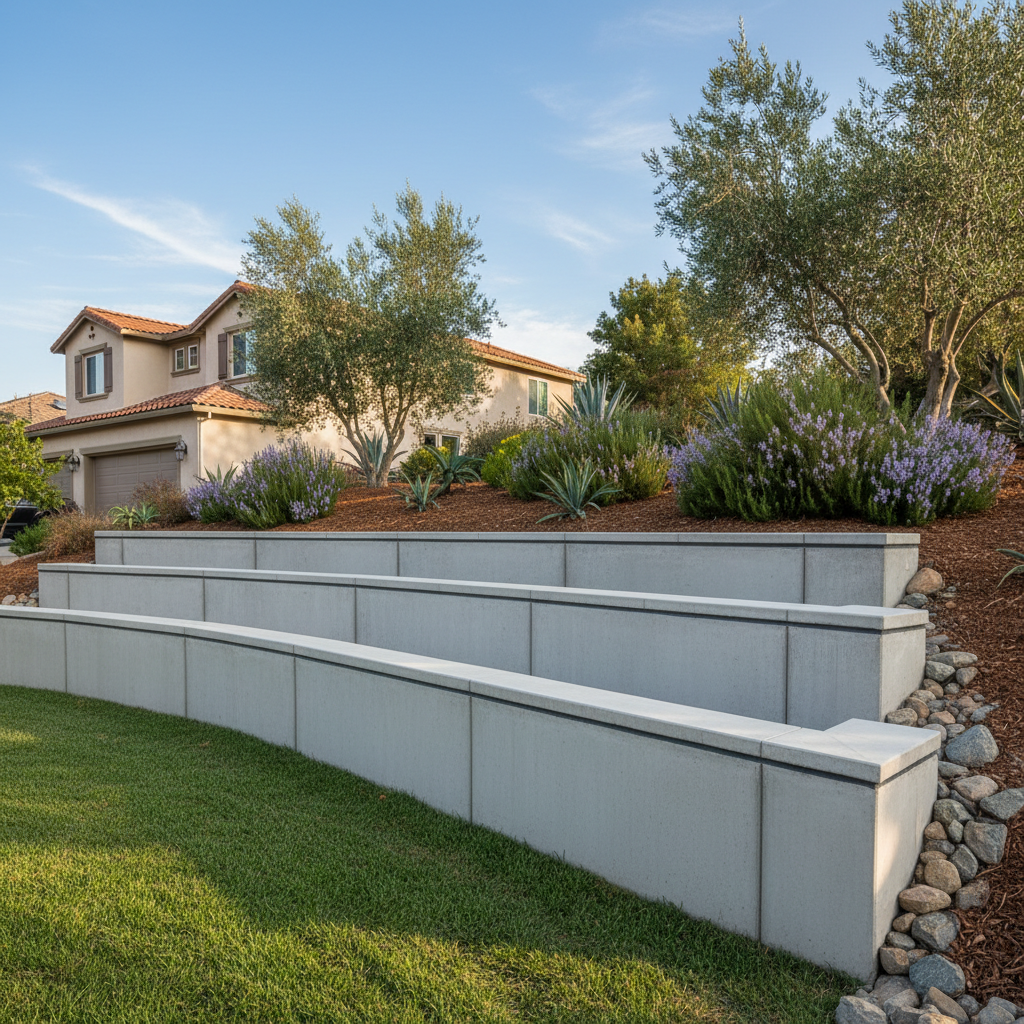
Alright, let's talk retaining walls. I’ve seen a lot of folks in Stockton, from the older homes in the Miracle Mile to the newer developments out by Spanos Park, try to tackle a retaining wall project or hire someone for it, and sometimes it just goes sideways. It’s not rocket science, but there are definitely some common screw-ups that can cost you a bundle and leave you with a mess instead of a solution. Here’s what I’ve seen and what you need to look out for.
Mistake #1: Skimping on the Design and Engineering
This is probably the biggest one. A retaining wall isn't just a stack of blocks or a pour of concrete. It's holding back a lot of dirt, and that dirt has weight, especially when it gets saturated after a good winter rain. You wouldn't build a house without a blueprint, right? Same goes for a retaining wall, especially if it's over four feet tall or if there's any kind of structure or significant load above it. You need an engineer to design it.
I've seen homeowners try to cut corners here, thinking they can just eyeball it or use some online calculator. Then, a few years later, the wall's bowing, cracking, or even collapsing. That's not just an eyesore; it's a hazard. Repairing a failed wall is almost always more expensive than doing it right the first time. Get the proper design, get the permits. It's non-negotiable for a safe, lasting wall.
Mistake #2: Ignoring Drainage – The Silent Killer
Water is the enemy of any retaining wall. If you don't manage the water behind and around the wall, you're asking for trouble. I'm talking about hydrostatic pressure – that's the force of water building up behind the wall. It can push even the strongest concrete wall right over.
You need proper drainage. This means a good layer of gravel or crushed rock directly behind the wall, a perforated drain pipe (often called a French drain) at the base of that gravel layer, and weep holes or outlets to let that water escape. And make sure those outlets are clear and directed away from the wall's foundation. Here in Stockton, with our clay soils, water can sit and build up pressure quickly if it doesn't have somewhere to go. Don't let a contractor tell you drainage isn't necessary. If they do, that's a huge red flag.
Mistake #3: Picking the Wrong Contractor (or Doing It Yourself When You Shouldn't)
Look, I get it. Everyone wants to save a buck. But a retaining wall isn't a weekend DIY project for most folks, especially if it's structural. And when you're hiring, you've got to be smart. Don't just go with the cheapest bid.
Here's what I tell people to look for:
- Experience with retaining walls: Not just general concrete work, but specifically retaining walls. Ask for references and pictures of their past projects.
- Licensing and Insurance: Make sure they're licensed by the CSLB and fully insured. You don't want to be liable if someone gets hurt on your property or if something goes wrong. We at Stockton Concrete Contractors always make sure we're up to snuff on this.
- Detailed Bid: A good contractor will give you a clear, itemized bid that breaks down materials, labor, and permits. If it's just a single number on a napkin, walk away.
- Understanding of Local Codes: They should know what the city of Stockton requires for permits, inspections, and setbacks.
A bad contractor can cut corners on the foundation, rebar, concrete mix, or drainage, and you won't know until it's too late. It’s worth paying a little more for peace of mind and a wall that lasts.
Mistake #4: Neglecting the Foundation
A retaining wall is only as good as its foundation. If the footing isn't deep enough, wide enough, or properly reinforced, the whole thing can settle unevenly, crack, or tilt. This is especially true in areas with less stable soil, and we definitely have some spots around Stockton where the ground can be a bit finicky.
The foundation needs to be dug down below the frost line (though that's less of a concern here than in colder climates, it's still about stability) and on undisturbed soil. It also needs to be wide enough to distribute the load of the wall and the soil it's holding back. Proper rebar placement in the footing and connecting up into the wall itself is crucial for strength and preventing cracks. Don't let anyone skip on the rebar or pour directly onto loose soil.
Mistake #5: Not Thinking About Maintenance
Once your wall is up, it's not a set-it-and-forget-it deal. You need to keep an eye on it. Make sure the drainage outlets stay clear. Don't let plants with aggressive root systems grow too close to the wall, as those roots can find their way into cracks and cause damage over time. Keep an eye out for any signs of cracking, bulging, or leaning. Catching a small problem early can save you from a major repair down the line.
A well-built concrete retaining wall is a fantastic addition to your property. It can solve erosion problems, create usable space, and boost your curb appeal. Just make sure you're avoiding these common mistakes, and you'll end up with a solid, long-lasting structure you won't regret.