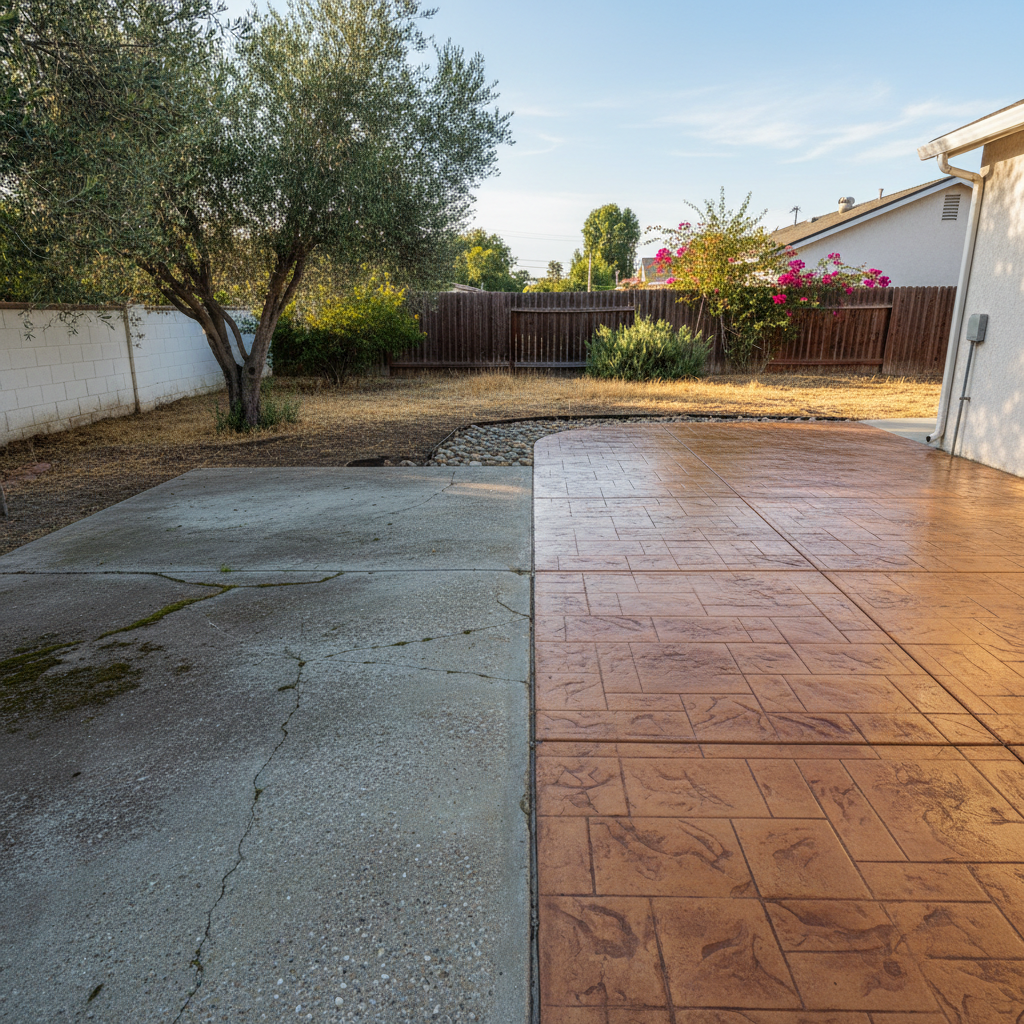
Alright, you're looking to spruce up your outdoor space, maybe a new patio, a walkway, or even a driveway, and you've heard about decorative concrete. Good choice, it's a solid investment. But then you start seeing terms like 'stamped' and 'stained,' and it can get a little confusing, right? Which one's right for your place here in Stockton? I've poured a lot of concrete in this town, from the Delta to the University Park area, and I've seen both of these options in action. Let's talk about what you need to know.
Stamped Concrete: The Look of Luxury Without the Luxury Price
Stamped concrete, sometimes called textured or imprinted concrete, is pretty cool. We pour fresh concrete, and while it's still wet, we press large rubber mats — or 'stamps' — into it. These stamps are designed to mimic the look of natural stone, brick, wood, or even tile. Then we add color, usually with integral colors mixed into the concrete itself and release agents that provide secondary colors and depth.
The Good Stuff (Pros):
- Appearance: This is where stamped concrete really shines. You can get incredible detail and texture. Want a flagstone patio but don't want to set individual stones? Stamped concrete can do that. It's really versatile in terms of patterns and colors, giving you a high-end look.
- Durability: It's concrete, so it's tough. When we install it correctly, it'll stand up to our Stockton summers and the occasional heavy rain we get. It's a solid slab, so you don't have individual pavers shifting or weeds growing between them.
- Value: You get a premium look for less than the cost of installing actual natural stone or brick. It adds serious curb appeal, which is always a plus if you ever decide to sell.
The Not-So-Good Stuff (Cons):
- Cost: It's generally more expensive upfront than stained concrete. The process is more labor-intensive, requiring specialized tools and skilled crews to get those patterns just right.
- Installation Complexity: We've got to do it quickly and precisely while the concrete is still pliable. There's less room for error compared to staining.
- Maintenance: While it's durable, it does need sealing every few years, especially in high-traffic areas or spots exposed to constant sun. If the seal wears off, the colors can fade, and the surface can become more susceptible to wear.
Stained Concrete: Color That Goes Deep
Stained concrete is a different animal. Instead of pressing patterns into wet concrete, we apply a chemical stain to existing, cured concrete. This stain reacts with the minerals in the concrete, creating a translucent, mottled, and unique color effect. It's not like paint; it penetrates the surface, so it won't chip or peel.
The Good Stuff (Pros):
- Appearance: It offers a rich, deep, and often variegated color that looks very natural and earthy. Think of it like a leather finish — it's got character. You can choose from acid stains (which react chemically) or water-based stains (which offer more color options). It's great for giving an older, plain concrete slab a new lease on life.
- Cost: Generally, staining costs less than stamping, especially if you already have a good concrete slab in place that just needs a facelift.
- Durability: Because the color penetrates the concrete, it's incredibly durable. It won't fade or chip like paint.
- Maintenance: Super easy. Just sweep it, hose it off, and reseal it every few years to protect the finish and keep it looking vibrant.
The Not-So-Good Stuff (Cons):
- Limited Patterns/Textures: This is the biggest difference. Stained concrete won't give you the texture of stone or wood. It's all about color. If your existing concrete has cracks or imperfections, staining might highlight them rather than hide them, though sometimes those imperfections can add to the 'character' of the stain.
- Surface Prep: The concrete needs to be clean and free of sealers, paint, or grease for the stain to penetrate properly. This can sometimes add to the prep work.
- Color Predictability: Especially with acid stains, the final color can vary depending on the concrete's composition. It's part of its charm, but it means you won't get a perfectly uniform, predictable color like you might with paint.
So, What's My Recommendation for Stockton?
Honestly, both are great options, and it really comes down to the look you're going for and your budget. But if I had to pick one for typical conditions here in Stockton, especially considering our expansive clay soils that can sometimes lead to minor slab movement over the decades, I'd lean towards:
For driveways and high-traffic outdoor areas where you want a premium, textured look: Stamped Concrete. It's a solid slab, so it handles vehicle weight well, and the patterns can really elevate your home's exterior. Just make sure you commit to that regular sealing to protect the color and surface.
For patios, interior floors, or refreshing existing concrete where you want rich color and easy maintenance: Stained Concrete. It's fantastic for adding warmth and character to a space. It's also a bit more forgiving if your slab isn't absolutely perfect, and the maintenance is a breeze. It's a cost-effective way to make a big visual impact.
Ultimately, think about the aesthetic you're trying to achieve and how much maintenance you're willing to do. If you're still on the fence, give us a call at Stockton Concrete Contractors. We can walk you through samples, show you what's possible, and help you figure out the best fit for your home and your budget.